Sahayog Multistate, with a financing journey stretching back to 2004, is offering fixed-deposit rates of up to 10.15% and bundling savings, insurance and credit for rural women, competing with the formal financial sector for small depositors.
As most formal-sector lenders trim deposit rates to protect margins, a member-owned cooperative in eastern Maharashtra is going the other way - leaning on a two-decade track record of steady, small-ticket community finance.
https://www.sahayogmultistate.com, whose community-financing work began in 2004 and which was formally registered under the Multi-State Co-operative Societies Act, 2002 in 2014, is offering fixed-deposit rates of up to 10.15% per annum on a 13-month tenure - a rate it describes as among the highest in the country’s cooperative sector and well above the 6.25–8.6% band offered by most mainstream deposit-taking institutions. The society, headquartered in Gondia, said the rates are part of a wider effort to draw small savers away from the informal channels that still dominate rural finance.
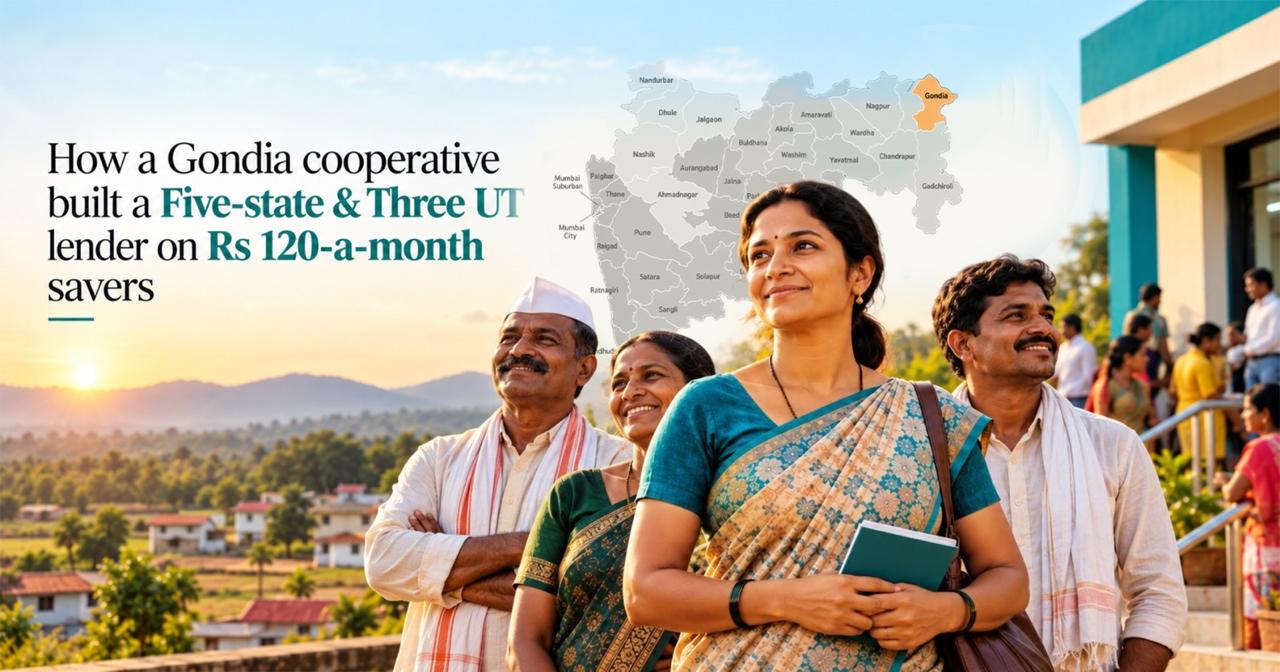
Operational at scale since its multistate registration in 2015, and drawing on more than 20 years of grassroots savings and credit work, Sahayog has grown from a two-state venture in Maharashtra and Karnataka into a network of more than 250+ branches across five states and three Union Territories. Membership has crossed one lakh; Its deposit and lending book has also crossed Rs 1,500 crore, reflecting the scale of its community-finance operations. its women’s savings network under the Sahayog Mahila Bachat Gat (SMBG) has expanded past four lakh beneficiaries; Overall, the society has served more than 15 lakh customers through its financial inclusion network. and its rural finance programme has reached more than 1.8 lakh women entrepreneurs, according to figures published by the society. Across that journey, the society reports no defaults on member obligations and a track record of every matured deposit being paid on time.
Its rural financial-inclusion effort is supported by more than 25,000 Swayamsevikas, who play a grassroots role in connecting women and communities with savings, credit and financial services. The model is straightforward. Sahayog takes deposits from its members and lends them to other members, mostly women, through joint liability loans, the SMBG group savings model, gold loans and loans against deposits. The spread between what it pays savers and what it charges borrowers funds the operation. “There is no shareholder to satisfy,” a society official said. “The money we take in from members is the money we lend back to members, and it has to come back on time - that discipline is what has kept us running clean for two decades.”
Cooperatives do not have the low-cost current and savings account base that helps larger formal-sector institutions contain funding costs, and they operate outside the RBI’s liquidity-window facilities available to scheduled commercial lenders. What Sahayog relies on instead, its officials say, is proximity and repetition - a branch manager who knows the depositor’s household, a field officer who collects savings at the doorstep, and a maturity register that has, so far, not slipped.
At the centre of the society’s pitch to rural women is an SMBG-linked recurring deposit that starts at Rs 120 a month. Over a 66-month tenure it pays 8% a year and bundles accidental insurance cover of up to Rs 25,000 with an overdraft facility of up to 75% of the accumulated balance. A member contributing the Rs 120 minimum for the full term accumulates about Rs 9,800, while one saving Rs 500 a month reaches close to Rs 41,000. Members can borrow against the balance during a medical emergency or a lean season without breaking the deposit - and, the society said, every matured recurring deposit under the scheme has been paid out on schedule.
Beyond the recurring deposit, Sahayog runs a daily deposit scheme from Rs 50 a day, a monthly income scheme aimed at retirees, the DAM Duppat long-term plan, and standard savings and current accounts. On the lending side it offers joint liability loans, the SWEES scheme for women entrepreneurs, gold loans, and loans against deposits of up to 80% of value, and has added health and life insurance to its product shelf.
In 2025 the society moved to Infosys Finacle, the Core Financial Solution used by several leading private-sector financial institutions. The switch gives its branches real-time accounts and digital records, and the back-end infrastructure of a much larger institution - layered on top of a community-lending model the society has been refining since 2004.
Whether the combination of high rates, rapid geographic expansion and new digital rails holds together will depend on how the society’s audit and governance systems scale. For now, the rates are drawing walk-ins, the deposit book is climbing, depositors across 5 states and 3 Union Territories are getting returns their neighbours at larger formal-sector institutions cannot match, and - the society emphasises - every matured deposit continues to be paid on time.