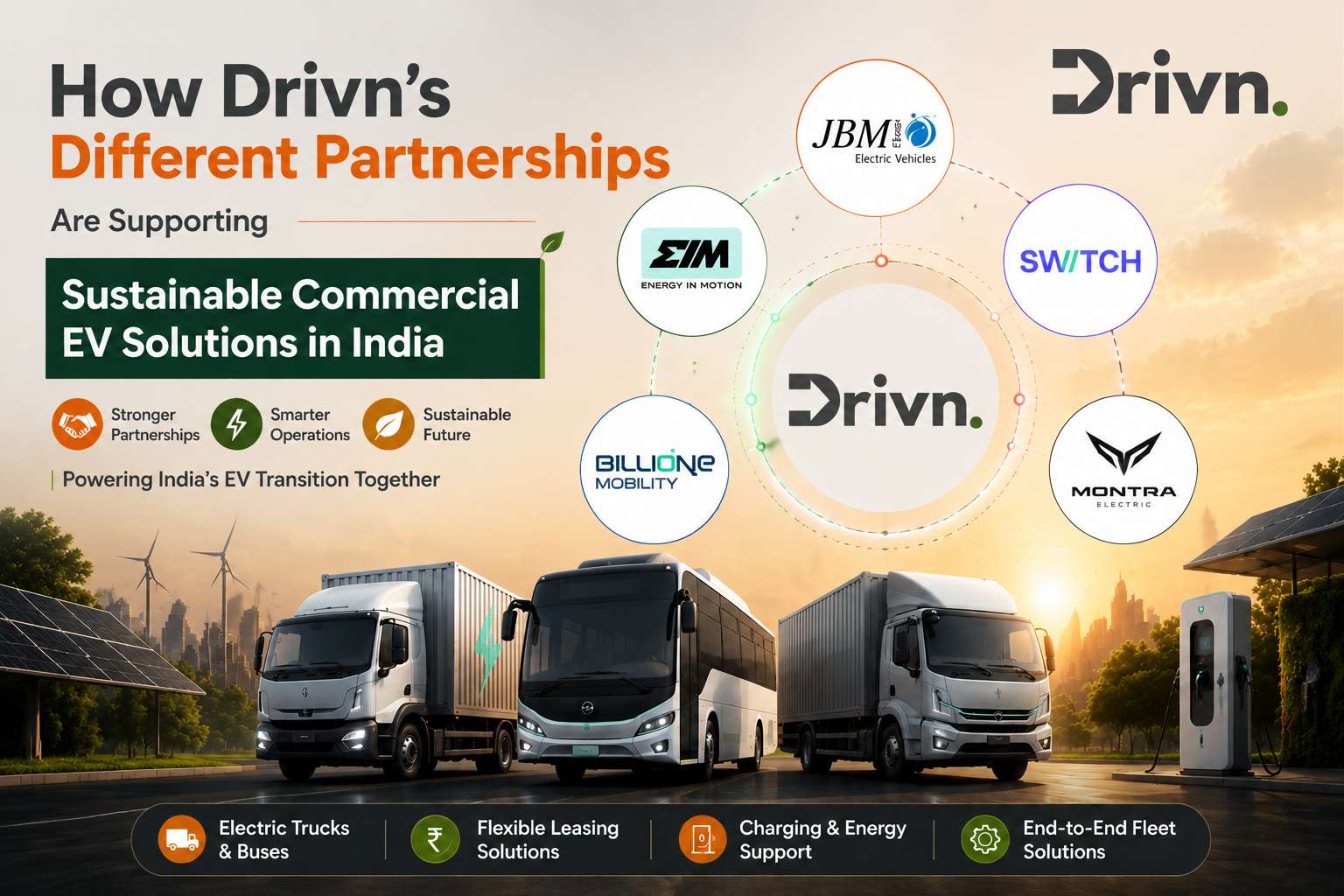
Partnerships are playing an important role in accelerating sustainable commercial EV adoption in India. DRIVN’s collaborations with vehicle manufacturers, mobility operators, and energy solution providers bring together different capabilities required to deploy electric trucks and buses at scale.
By connecting vehicles, financing, charging support and fleet operations, these partnerships help address key challenges and enable more efficient sustainable EV solutions in India.
What Roles Do Different Partners Play in Commercial EV Adoption?
A successful commercial EV ecosystem depends on coordination between multiple stakeholders. Each partner contributes towards making electric mobility more practical and scalable.
These EV partnerships in India demonstrate why collaboration between vehicle manufacturers, mobility operators, energy providers and fleet solution companies is becoming a key requirement for commercial electrification.
How DRIVN’s Partnerships Support Sustainable EV Adoption
DRIVN is building a connected commercial EV ecosystem by bringing together vehicle manufacturers, fleet operators, mobility companies and energy solution providers. Instead of viewing EV adoption only as a vehicle purchase decision, DRIVN focuses on creating integrated fleet solutions that address deployment, operations and long-term usability.
Its partnership with JBM Electric Vehicles supports electric bus deployment, while collaborations with Switch Mobility and Montra Electric strengthen access to commercial electric vehicles. DRIVN has also partnered with Energy in Motion and BillionE Mobility to support electric truck adoption through fleet deployment and energy solutions.
These collaborations represent some of the key EV partnerships in India that are helping address challenges around vehicle availability, charging infrastructure, and fleet operations.
Key Factors That Make Commercial EV Partnerships Successful
Strong partnerships require more than agreements between companies. They need clear responsibilities and long-term coordination across the ecosystem.
Important factors include:
- Vehicle suitability: Electric trucks and buses should match route requirements, payload needs, and operating conditions.
- Charging coordination: Fleet deployment should align with available charging or battery-swapping infrastructure.
- Maintenance support: Reliable service networks are important for reducing downtime and improving vehicle availability.
- Flexible financing models: Leasing structures should support different fleet sizes and business requirements.
- Operational monitoring: Tracking utilisation, energy consumption and vehicle performance helps improve efficiency.
- Lifecycle planning: Battery management, vehicle redeployment and long-term asset use should be considered from the beginning.
These factors help partnerships create practical commercial EV solutions in India rather than simply increasing the number of electric vehicles on roads.
To Conclude
Collaboration across the commercial EV ecosystem is playing a key role in driving sustainable commercial EV solutions in India. Partnerships between manufacturers, fleet operators, energy providers and leasing companies help address challenges such as high upfront costs, charging infrastructure and operational efficiency.
Through its ecosystem-driven approach, DRIVN brings together key stakeholders to support scalable and flexible electric fleet adoption. As demand for electric trucks and buses grows, commercial EV partnerships in India will play an important role in building reliable and scalable mobility solutions.
FAQs
1. How does DRIVN support businesses in adopting commercial EVs?
DRIVN supports businesses through leasing solutions and partnerships with EV manufacturers, mobility operators and energy providers, enabling fleet adoption without high upfront costs.
2. Why are partnerships important for scaling commercial EV adoption in India?
Partnerships bring together different capabilities required for EV adoption, including vehicle supply, charging infrastructure, financing and fleet management. This collaborative approach helps overcome operational challenges and makes electric mobility more accessible for businesses.
3. What makes DRIVN’s partnership-led model effective for sustainable EV solutions?
DRIVN’s model is effective because it integrates multiple ecosystem players into a single solution. By working with manufacturers, energy companies, and fleet operators, DRIVN ensures that businesses receive end-to-end support, improving efficiency, reducing risks, and enabling long-term sustainability in electric fleet operations.